
Property tax delinquency directly shapes contracting decisions across every stage of a project, from initial bid evaluation to closing. Contractors who ignore delinquency signals walk into deals carrying hidden liabilities. Those who read them early gain negotiating leverage, spot distressed opportunities before the competition, and stay compliant with federal procurement rules.
Here is what every contractor and real estate professional needs to know up front:
- Federal compliance exposure: The Federal Acquisition Regulation (FAR) requires contractors to disclose delinquent tax debts reported within the three years preceding a bid. Unresolved liens can trigger suspension or debarment from federal work.
- Valuation risk: A Federal Reserve study found that a single additional tax-delinquent property within 500 feet reduces neighboring home sale prices by at least 1.3%. That spillover directly affects your ROI projections on residential projects.
- Title and deal risk: Delinquent taxes are a lien on the property. They must be resolved at closing or they become the buyer's problem, often surfacing as unexpected liabilities after the contract is signed.
- Opportunity signal: Tax delinquency is also a leading indicator of distressed properties entering the market. Contractors who track these signals early reach motivated sellers before the crowd forms.
- AI-powered early visibility: Shovld aggregates tax lien data, code violations, permits, and distressed-property indicators across U.S. markets, scoring opportunities so contractors can act before a property becomes widely known.
Table of Contents
- How municipal tax enforcement creates contracting risks and opportunities
- What due diligence on tax delinquency looks like in real estate agreements
- How Shovld uses AI signal intelligence to surface tax delinquency opportunities
- Legal and regulatory frameworks contractors must navigate
- Key Takeaways
How municipal tax enforcement creates contracting risks and opportunities
Municipal tax collection is messier than most contractors realize, and that complexity flows directly into project risk.
The core problem, documented in Lincoln Institute research by Michelle Zimmerman Marchiony, is that municipalities struggle to distinguish between property owners who cannot pay, those who will not pay, and those who do not even know they owe. Blanket enforcement punishes the first group while doing little to deter the second. That ambiguity forces municipalities into enforcement strategies with uneven results for contractors working in affected neighborhoods.
Key dynamics contractors should understand:
- Revenue shortfalls are real and large. In fiscal year 2018, New York City failed to collect approximately $341 million in property taxes and subsequently sold roughly $105.5 million in tax liens to recover prior-year losses. Delinquent taxes nationally were estimated at more than $7 billion annually, according to Marchiony's analysis published in the Emory Law Journal.
- Tax lien sales reduce shortfalls but carry side effects. A 2016 study of Ohio counties found that tax lien sales reduce uncollected property tax balances by 5.6%. The catch: aggressive lien sales can signal to some owners that delinquency is manageable, which can encourage further avoidance.
- Contract-based controls on servicers protect contractors indirectly. When governments hire private servicers to collect delinquent taxes, contract terms limit the collection tactics those servicers can use. This matters for contractors because predatory servicer behavior can accelerate foreclosures on properties mid-project.
- Economic penalties move behavior. A Philadelphia experiment found that reminder letters stressing economic sanctions returned $65 to $68 in additional city tax revenues for every dollar spent on the letter. Municipalities that use these tools tend to have more predictable collection environments, which stabilizes neighborhood property values.
- Enforcement inconsistency varies by market. Some counties sell liens to private investors within months of delinquency. Others hold liens for years. Contractors bidding in unfamiliar markets need to know which model applies locally before pricing a project.
Pro Tip: Before bidding on a project in a new market, check whether the county uses municipal lien servicing or sells liens to private investors. The answer changes your timeline risk and your negotiation posture with the property owner.
What due diligence on tax delinquency looks like in real estate agreements
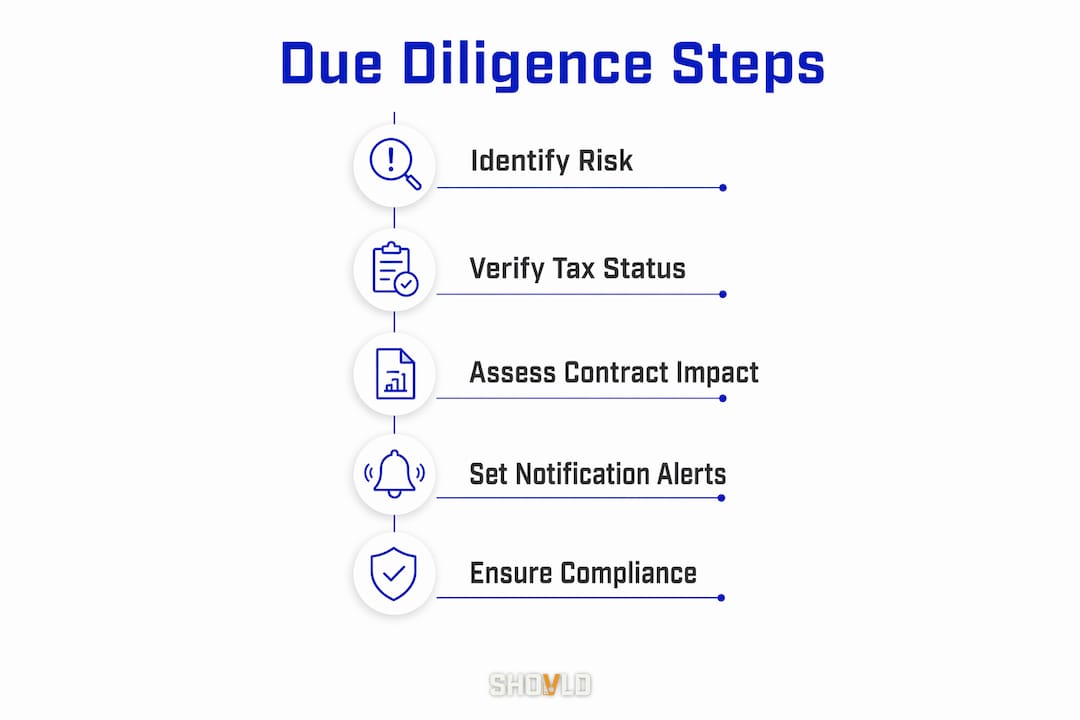
Tax delinquency status is a deal-breaker clause in most well-drafted purchase agreements, and contractors who skip this step absorb the seller's liability.

Standard real estate purchase agreements require sellers to provide tax bills for the past three years, utility records, maintenance reports, and any outstanding lien documentation. Sellers are typically obligated to satisfy delinquent tax liens at closing. If they cannot, buyers have the right to terminate or renegotiate. That clause is your protection, but only if you verify the status before signing.
Verbal assurances from sellers about tax payment status are unreliable. Verifying tax certificates directly with the county is the only way to confirm what is actually owed. Municipal fiscal years and proration practices vary widely, meaning a property can carry a tax liability that does not appear in the seller's documentation but surfaces at closing.
Practical due diligence steps for contractors:
- Pull the county tax certificate directly, not from the seller's paperwork.
- Confirm whether any outstanding lien has been sold to a private investor, because lien jurisdiction varies significantly by county and state.
- Verify that tax proration at closing accounts for the full current year, not just the period through the closing date.
- Check title insurance commitments for delinquent tax exceptions. An ALTA owner's policy should remove those exceptions before you close.
- Review the most recent tenant delinquency report if the property is income-producing, since unpaid rents and unpaid taxes often travel together.
For contractors evaluating off-market property deals, Shovld's public record aggregation surfaces tax lien status alongside code violations and permit history, giving you a consolidated risk picture before you spend time on a site visit.
How Shovld uses AI signal intelligence to surface tax delinquency opportunities
Most contractors find out about a distressed property when everyone else does. Shovld is built to change that timing problem.
The platform pulls permits, tax liens, code violations, HOA pressure signals, and deferred maintenance indicators from public records across multiple U.S. markets. It then scores each property based on the combination and severity of those signals. A property with a tax lien, an open code violation, and no recent permit activity scores differently than one with a lien alone. That scoring lets contractors prioritize the properties most likely to convert into real projects with motivated sellers.
- Early-stage lead identification: Shovld surfaces tax-delinquent properties before they reach foreclosure or public auction, giving contractors a window to approach owners directly.
- CRM and workflow integration: Tax delinquency data feeds directly into follow-up workflows, so your team is not manually tracking lien status across county websites.
- Opportunity scoring by risk profile: Not every delinquent property is worth pursuing. Shovld's scoring accounts for neighborhood context, including the spillover valuation effects that clusters of delinquent properties create, so you bid with accurate ROI assumptions.
- Multi-signal verification: A single tax lien is a yellow flag. A tax lien combined with a code violation, deferred maintenance signals, and no active permits is a red flag or a green light, depending on your business model. Shovld shows you the full picture.
Restoration companies and remodeling contractors, in particular, benefit from this early visibility. A property heading toward tax foreclosure often has deferred maintenance that translates directly into remediation or renovation scope. Getting there before the property hits the open market means less competition and a more motivated seller. You can also review the public record due diligence checklist Shovld publishes to build this into your standard evaluation process.
Pro Tip: Set up Shovld alerts for tax-delinquent properties in your target zip codes that also carry open code violations. That combination signals a property owner under pressure on multiple fronts, which is the best entry point for a direct outreach.
Legal and regulatory frameworks contractors must navigate
Federal procurement rules on tax delinquency are stricter than most contractors expect, and local rules add another layer.
Under FAR, prospective federal contractors must certify whether they have, within the three years preceding their offer, been notified of any unresolved delinquent tax debt or unsatisfied tax lien. The proposed FAR amendments also add delinquent taxes and unresolved liens as explicit grounds for suspension or debarment. A contractor who certifies falsely faces not just debarment but potential criminal liability.
Beyond federal work, local jurisdictions increasingly use contract-based penalties on third-party tax lien servicers rather than waiting for legislative action. That shift toward contract-based enforcement means the rules governing a specific property's lien can change faster than statute-based frameworks, and contractors need current information, not last year's research.
Key legal steps for contractors:
- Verify lien removals in title insurance commitments before closing on any property with a prior delinquency history.
- Include contractual indemnification language covering tax delinquency liabilities that surface after closing.
- On federal bids, certify tax status accurately. A delinquency that was resolved before bidding generally does not disqualify you, but an unresolved one does.
- Understand that when a property owner fails to disclose outstanding tax issues in a real estate contract, you may have legal remedies, but pursuing them costs time and money that proper due diligence would have avoided.
- In states with construction lien exposure, tax delinquency on a property can complicate your own lien rights. Florida contractors, for example, should understand how construction lien law interacts with existing tax liens on a property before starting work.
The contractors who stay out of trouble are the ones who treat tax delinquency verification as a non-negotiable step in their intake process, not an afterthought at closing.
Key Takeaways
Property tax delinquency functions simultaneously as a compliance risk, a valuation factor, and an early-stage opportunity signal that contractors must track and act on before the market catches up.
| Point | Details |
|---|---|
| Federal disclosure is mandatory | FAR requires contractors to certify any unresolved tax debt within the past three years; violations can result in debarment. |
| Delinquency depresses nearby values | A tax-delinquent property within 500 feet reduces neighboring sale prices by at least 1.3%, directly affecting project ROI. |
| Verify tax certificates directly | Verbal assurances are unreliable; pull county tax certificates and confirm lien status before any contract is signed. |
| AI signals reveal early opportunities | Shovld scores tax-delinquent properties alongside code violations and permit gaps, surfacing leads before they reach public auction. |
| Contract terms are your legal protection | Require sellers to satisfy delinquent liens at closing and include indemnification language covering post-closing tax liabilities. |